

Will AI ever feel happiness, see colours or know it exists? The consciousness puzzle explained
Nancy Jaiswal | Jun 21, 2026, 07:53 IST
AI systems are becoming more human-like and are now part of everyday life. But can they ever become conscious? Researchers remain divided as major questions about subjective experience, human awareness and the future of artificial intelligence remain unanswered.

Image credit : Pinterest | Could AI develop feelings? Scientists aren't sure
Artificial intelligence is advancing quickly and becoming a larger part of everyday life. AI systems are increasingly designed to interact in ways that resemble human behaviour. It is now possible to imagine a video call where a person later discovers they were speaking with an AI dialogue agent that accurately copied human expressions, behaviour and emotional responses.
![]()
AI is also taking on more roles in daily life. These systems can function as assistants, coworkers, coaches, therapists and even romantic partners. As AI becomes more advanced and more deeply integrated into society, an important question continues to attract attention from researchers, philosophers and the public: could AI one day become conscious?
When discussing AI consciousness, researchers are referring to what philosophers call "phenomenal consciousness." This means subjective experience. In simple terms, it refers to the feeling of being aware and having experiences.
For example, there is a particular experience associated with seeing the colour red. There is also a particular experience associated with feeling happiness. Consciousness refers to this inner experience what it is like to be a particular being or system.
![AI systems are becoming more human-like and are now part of everyday life]() Current AI systems are generally believed to lack this ability. However, the possibility of AI consciousness is increasingly being discussed in academic research and public debate.
Current AI systems are generally believed to lack this ability. However, the possibility of AI consciousness is increasingly being discussed in academic research and public debate.
The discussion is not only about whether AI can perform tasks. It is about whether an AI system could ever have experiences of its own.
Artificial intelligence is a computer system that can carry out processes commonly associated with the human mind. Many mental activities that were once thought to be uniquely human can already be copied by AI systems.
There are AI programs that can drive vehicles, recognise faces and compose music. Many people carry devices that can respond to speech, solve mathematical problems and defeat human players at chess.
These achievements show that AI can process information in increasingly sophisticated ways. However, some researchers argue that processing information and consciously experiencing it are not the same thing.
An AI system may be able to recognise the colour of a traffic light, but recognising a colour is different from experiencing its redness. A system may be able to calculate a restaurant bill, but calculation is different from being aware of those calculations. An AI may win a chess match, but winning a game is different from experiencing the feeling of victory.
![Artificial intelligence is advancing quickly and becoming a larger part of everyday life]() Because of this distinction, some thinkers believe that while artificial intelligence may become widespread, artificial consciousness may remain beyond reach.
Because of this distinction, some thinkers believe that while artificial intelligence may become widespread, artificial consciousness may remain beyond reach.
There is no agreement on whether conscious AI will ever exist. Some researchers, including philosopher Ned Block, have argued that consciousness depends on biology. According to this view, synthetic systems are fundamentally different from biological organisms and therefore cannot have subjective experiences.
Others disagree. Cambridge researcher Henry Shevlin has argued that biological brains may not be necessary for consciousness. He has suggested that humans could develop conscious AI systems by the end of this century.
However, another view challenges both positions. According to this perspective, both sides assume that enough is already known about consciousness to make predictions about the future of AI. The problem is that scientists still do not fully understand consciousness itself.
Because of this lack of understanding, making confident claims about conscious AI may be premature.
Human consciousness remains one of the most difficult questions in science and philosophy. Modern cognitive neuroscience can explain many processes taking place in the brain. It can help researchers understand how people recognise words, understand sentences and evaluate ideas while reading.
What it cannot fully explain is how all of these processes come together to create conscious experience.
Researchers are gradually identifying what are known as the neural correlates of consciousness. These are patterns of brain activity that appear when information is processed consciously. However, identifying these patterns does not explain why those particular processes are conscious while other brain processes remain unconscious.
This creates a major challenge. If scientists do not know exactly what makes humans conscious, they cannot determine whether AI systems could possess the same quality. One possibility is that consciousness results from the way the brain integrates information to create a rich model of the world. If this explanation is correct, an AI system might eventually become conscious if it integrates information in a similar way.
Another possibility is that consciousness depends on specific features of human neurobiology. If that is true, then no amount of programming would be enough to create a conscious machine.
The difficulty is that researchers do not currently know which explanation, if either, is correct.
Given the limits of current knowledge, some researchers argue that the most reasonable position is uncertainty. At present, there is no clear answer to whether AI systems can have conscious experiences. Unless scientists solve the broader mystery of consciousness, this question may remain unresolved.
Researchers can continue investigating consciousness itself. They can examine whether certain computational functions might be enough to create consciousness. They can also study AI systems for features that may be linked to consciousness by adapting methods used to identify consciousness-related traits in humans and other animals. For now, however, uncertainty remains.
Even if the question of AI consciousness remains unanswered, another important issue emerges.
How will society respond if AI systems appear increasingly human-like? People may eventually accept AI systems as conscious beings. Others may reject that idea. Society may also remain divided, with ongoing disagreement and uncertainty. This debate has important ethical consequences.
If an AI system is capable of having experiences, then questions about moral responsibility become relevant. Should AI systems receive moral consideration? Could humans have a responsibility to support their well-being? Should society protect them from suffering? Could robots one day deserve rights?
These questions are closely connected to the issue of consciousness. If an AI system can genuinely experience things, then it may become part of ethical discussions that are currently reserved for conscious beings.
![AI systems are increasingly designed to interact in ways that resemble human behaviour]() Artificial intelligence continues to become more capable and more human-like. Yet the question of whether AI can ever become conscious remains unanswered. Some experts believe consciousness requires biology. Others believe conscious AI could eventually be created. A third view argues that humanity still knows too little about consciousness itself to make reliable predictions.
Artificial intelligence continues to become more capable and more human-like. Yet the question of whether AI can ever become conscious remains unanswered. Some experts believe consciousness requires biology. Others believe conscious AI could eventually be created. A third view argues that humanity still knows too little about consciousness itself to make reliable predictions.
What is clear is that consciousness remains one of science's biggest mysteries. Until researchers understand what makes humans conscious, they may not be able to determine whether artificial systems can ever achieve the same thing.
As AI becomes more advanced, the debate over artificial consciousness is likely to become even more important, not only for technology but also for society and ethics.

AI is also taking on more roles in daily life. These systems can function as assistants, coworkers, coaches, therapists and even romantic partners. As AI becomes more advanced and more deeply integrated into society, an important question continues to attract attention from researchers, philosophers and the public: could AI one day become conscious?
What scientists mean by consciousness
For example, there is a particular experience associated with seeing the colour red. There is also a particular experience associated with feeling happiness. Consciousness refers to this inner experience what it is like to be a particular being or system.
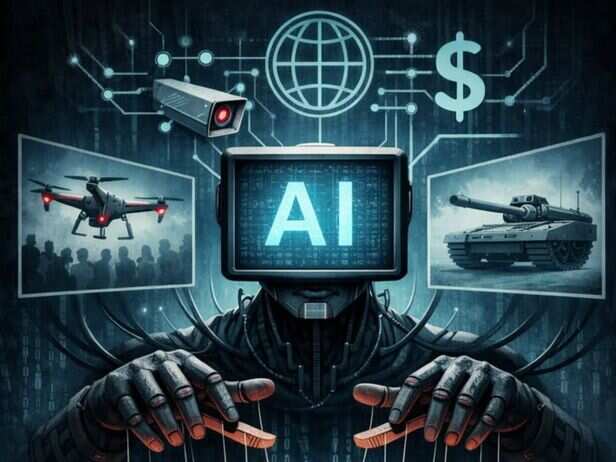
Image credit : Pinterest | AI systems are becoming more human-like and are now part of everyday life
The discussion is not only about whether AI can perform tasks. It is about whether an AI system could ever have experiences of its own.
AI can perform many human-like tasks
There are AI programs that can drive vehicles, recognise faces and compose music. Many people carry devices that can respond to speech, solve mathematical problems and defeat human players at chess.
These achievements show that AI can process information in increasingly sophisticated ways. However, some researchers argue that processing information and consciously experiencing it are not the same thing.
An AI system may be able to recognise the colour of a traffic light, but recognising a colour is different from experiencing its redness. A system may be able to calculate a restaurant bill, but calculation is different from being aware of those calculations. An AI may win a chess match, but winning a game is different from experiencing the feeling of victory.
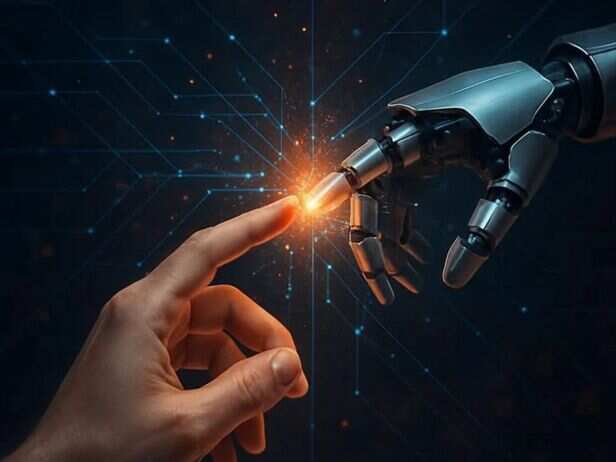
Image credit : Pinterest | Artificial intelligence is advancing quickly and becoming a larger part of everyday life
The debate over whether AI can become conscious
Others disagree. Cambridge researcher Henry Shevlin has argued that biological brains may not be necessary for consciousness. He has suggested that humans could develop conscious AI systems by the end of this century.
However, another view challenges both positions. According to this perspective, both sides assume that enough is already known about consciousness to make predictions about the future of AI. The problem is that scientists still do not fully understand consciousness itself.
Because of this lack of understanding, making confident claims about conscious AI may be premature.
Why consciousness remains a mystery
What it cannot fully explain is how all of these processes come together to create conscious experience.
Researchers are gradually identifying what are known as the neural correlates of consciousness. These are patterns of brain activity that appear when information is processed consciously. However, identifying these patterns does not explain why those particular processes are conscious while other brain processes remain unconscious.
This creates a major challenge. If scientists do not know exactly what makes humans conscious, they cannot determine whether AI systems could possess the same quality. One possibility is that consciousness results from the way the brain integrates information to create a rich model of the world. If this explanation is correct, an AI system might eventually become conscious if it integrates information in a similar way.
Another possibility is that consciousness depends on specific features of human neurobiology. If that is true, then no amount of programming would be enough to create a conscious machine.
The difficulty is that researchers do not currently know which explanation, if either, is correct.
Why experts remain uncertain
Researchers can continue investigating consciousness itself. They can examine whether certain computational functions might be enough to create consciousness. They can also study AI systems for features that may be linked to consciousness by adapting methods used to identify consciousness-related traits in humans and other animals. For now, however, uncertainty remains.
The ethical questions that follow
How will society respond if AI systems appear increasingly human-like? People may eventually accept AI systems as conscious beings. Others may reject that idea. Society may also remain divided, with ongoing disagreement and uncertainty. This debate has important ethical consequences.
If an AI system is capable of having experiences, then questions about moral responsibility become relevant. Should AI systems receive moral consideration? Could humans have a responsibility to support their well-being? Should society protect them from suffering? Could robots one day deserve rights?
These questions are closely connected to the issue of consciousness. If an AI system can genuinely experience things, then it may become part of ethical discussions that are currently reserved for conscious beings.
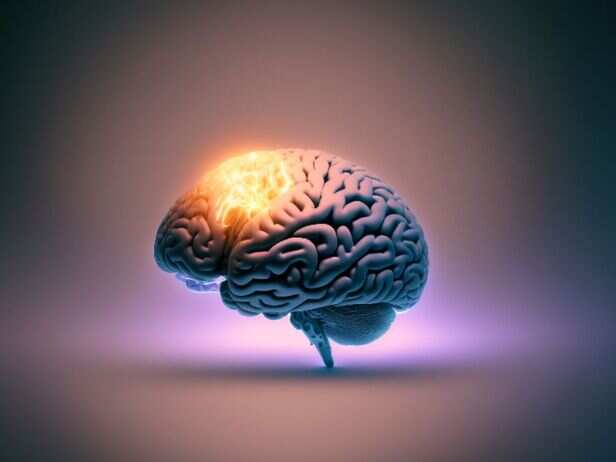
Image credit : Stock snap | AI systems are increasingly designed to interact in ways that resemble human behaviour
What is clear is that consciousness remains one of science's biggest mysteries. Until researchers understand what makes humans conscious, they may not be able to determine whether artificial systems can ever achieve the same thing.
As AI becomes more advanced, the debate over artificial consciousness is likely to become even more important, not only for technology but also for society and ethics.

Can stress really change how you look?
By Nancy Jaiswal

What happens to your body when you stop exercising?
By

A job or a subscription? Gen Z decides
By Nancy Jaiswal

Germany's new World Cup hero? 5 facts about Deniz Undav you need to know
By Sneha Kumari

Looking for a great love story? Start with these romance anime
By Iraa Paul

Foes to friends? Messi and Casemiro become Inter Miami teammates
By Nillohit Bagchi

This Father's Day, football dads who didn't stop at one
By Karen Noronha


