

What would really happen if Earth suddenly stopped rotating? The science behind a global catastrophe
Nancy Jaiswal | Jun 15, 2026, 08:05 IST
Earth’s rotation shapes everything from day and night to weather and ocean currents. Scientists explain what could happen if the planet suddenly stopped spinning, why inertia matters, how ecosystems would be affected, and why such a scenario remains highly unlikely.

Image credit : AI generated | What would happen if Earth suddenly stopped spinning?
Earth is the only known planet where life exists and one of the defining features of the planet is its constant rotation. Although people do not feel the Earth spinning beneath them, that motion plays a major role in shaping daily life, weather patterns and the cycle of day and night. The idea of Earth suddenly stopping its rotation may sound like science fiction, but it raises important scientific questions about motion, inertia and the forces that influence our planet. Scientists say such a scenario is extremely unlikely, but understanding it helps explain why Earth behaves the way it does.
![]()
To understand what would happen if Earth stopped spinning, it is important to first understand Newton’s First Law of Motion, also known as the law of inertia. According to this law, an object at rest remains at rest, while an object in motion continues moving at the same speed and in the same direction unless acted upon by an external and opposing force.
![Earth’s rotation shapes everything from day and night to weather and ocean currents]() This tendency to maintain motion is known as inertia. Earth, the Sun and the rest of the solar system are not experiencing any external force capable of stopping their movement. As a result, the planets have continued spinning since their formation because of inertia.
This tendency to maintain motion is known as inertia. Earth, the Sun and the rest of the solar system are not experiencing any external force capable of stopping their movement. As a result, the planets have continued spinning since their formation because of inertia.
Scientists explain that rotation is a common feature throughout the universe. Every known planet rotates, and stars also rotate, although often at slower rates. Stars form from large clouds of gas and dust that gradually condense while already moving in a circular motion. The solar system itself formed from a massive rotating disk of debris surrounding the young Sun. Because the material that eventually became the planets was already circling, most planets in the solar system rotate in the same direction.
Planetary impacts also contributed to rotation. During the formation of planets, collisions with other objects were common. Similar to billiard balls, when objects collide without striking head-on, one or both objects can begin spinning. These processes helped establish the rotation seen across the solar system today.
If Earth were to stop spinning suddenly, the consequences would be catastrophic. One important point, however, is that people would not simply fall off the planet.
The greater danger would come from inertia. Earth currently rotates at nearly 1,700 kilometres per hour, with speeds reaching around 1,600 kilometres per hour, or roughly 1,000 miles per hour, near the equator. If the planet abruptly stopped rotating, people, vehicles, buildings, rocks and virtually everything not firmly attached to the bedrock would continue moving at those speeds.
![Earth is the only known planet where life exists]() At the same time, the atmosphere would also continue moving. Even though Earth's surface would have stopped, the air would retain its motion due to inertia. Scientists say this moving atmosphere could sweep across the surface at tremendous speeds, carrying away rocks, vehicles, buildings and living things.
At the same time, the atmosphere would also continue moving. Even though Earth's surface would have stopped, the air would retain its motion due to inertia. Scientists say this moving atmosphere could sweep across the surface at tremendous speeds, carrying away rocks, vehicles, buildings and living things.
The regions near the poles would likely experience comparatively less direct impact because those areas rotate very little or not at all. However, even these locations would not escape the consequences. The enormous forces generated by such an event could trigger earthquakes and tsunamis, creating severe conditions across the planet.
The effects of a sudden stop would extend far beyond the initial destruction. Scientists suggest that much of Earth would become highly inhospitable.
The atmosphere and oceans are strongly influenced by Earth’s rotation. If that rotation ended, weather systems and ocean currents would be dramatically altered. The changes would not be limited to a single region but would affect the entire planet.
The destruction caused by moving air, combined with disruptions to environmental systems, would severely impact ecosystems. According to scientists, the ecosystem on Earth could be wiped out completely under such circumstances.
The result would be a planet facing conditions very different from those that currently support life.
One of the most significant long-term changes would involve the length of days and nights.
Today, Earth’s rotation creates the familiar 24-hour cycle that divides time into day and night. If Earth stopped rotating, this system would no longer exist in its current form.
Scientists explain that a day would effectively become six months long, followed by six months of darkness. The side of Earth facing the Sun would experience continuous daylight for months at a time, while the opposite side would remain in darkness for an equally long period.
These prolonged periods of light and darkness would produce extreme conditions across the planet.
Read More: Could India witness the Northern Lights? 5 places to watch the rare Aurora Borealis
The six-month day-and-night cycle would lead to major temperature differences between the two sides of the planet.
The side facing the Sun would endure intense summer-like conditions as it remained exposed to sunlight for extended periods. Meanwhile, the side facing away from the Sun would experience severe winter conditions during months of darkness.
![The idea of Earth suddenly stopping its rotation may sound like science fiction, but it raises important scientific questions]() Scientists say these extreme temperature contrasts would contribute to the formation of giant storms. Such storms could persist for very long periods as the planet adjusted to the new environmental conditions.
Scientists say these extreme temperature contrasts would contribute to the formation of giant storms. Such storms could persist for very long periods as the planet adjusted to the new environmental conditions.
Combined with the earlier destruction caused by inertia and atmospheric movement, these changes would further reduce the planet’s ability to support life as it does today.
Despite the dramatic consequences described by scientists, there is good news. Earth is extremely unlikely to stop rotating.
Rotation is a natural outcome of how planets and stars form. The same physical processes that created Earth also gave it its spin. Since there is no known external force acting to bring the planet’s rotation to a sudden halt, scientists do not expect such an event to occur.
The continued rotation of Earth remains a fundamental part of how the planet functions. It influences weather systems, ocean currents, the cycle of day and night and many other processes that make life possible.
While imagining a motionless Earth offers an interesting scientific exercise, the evidence suggests that the planet will continue spinning just as it has since its formation, maintaining the conditions that support life today.

Understanding why earth keeps spinning
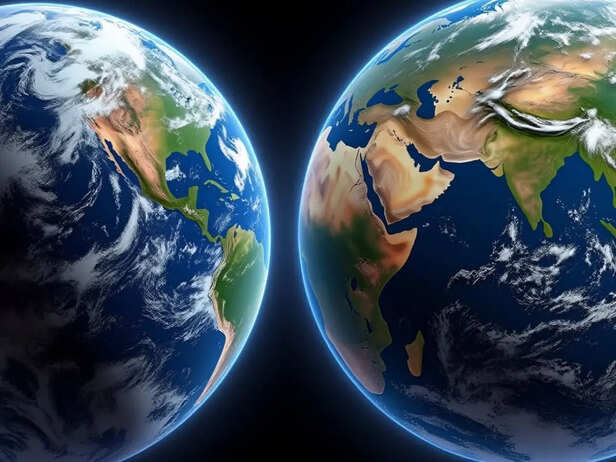
Image credit : AI generated | Earth’s rotation shapes everything from day and night to weather and ocean currents
Scientists explain that rotation is a common feature throughout the universe. Every known planet rotates, and stars also rotate, although often at slower rates. Stars form from large clouds of gas and dust that gradually condense while already moving in a circular motion. The solar system itself formed from a massive rotating disk of debris surrounding the young Sun. Because the material that eventually became the planets was already circling, most planets in the solar system rotate in the same direction.
Planetary impacts also contributed to rotation. During the formation of planets, collisions with other objects were common. Similar to billiard balls, when objects collide without striking head-on, one or both objects can begin spinning. These processes helped establish the rotation seen across the solar system today.
The immediate impact of a sudden stop
The greater danger would come from inertia. Earth currently rotates at nearly 1,700 kilometres per hour, with speeds reaching around 1,600 kilometres per hour, or roughly 1,000 miles per hour, near the equator. If the planet abruptly stopped rotating, people, vehicles, buildings, rocks and virtually everything not firmly attached to the bedrock would continue moving at those speeds.
Image credit : AI generated | Earth is the only known planet where life exists
The regions near the poles would likely experience comparatively less direct impact because those areas rotate very little or not at all. However, even these locations would not escape the consequences. The enormous forces generated by such an event could trigger earthquakes and tsunamis, creating severe conditions across the planet.
How weather and ecosystems would change
The atmosphere and oceans are strongly influenced by Earth’s rotation. If that rotation ended, weather systems and ocean currents would be dramatically altered. The changes would not be limited to a single region but would affect the entire planet.
The destruction caused by moving air, combined with disruptions to environmental systems, would severely impact ecosystems. According to scientists, the ecosystem on Earth could be wiped out completely under such circumstances.
The result would be a planet facing conditions very different from those that currently support life.
What happens to day and night?
Today, Earth’s rotation creates the familiar 24-hour cycle that divides time into day and night. If Earth stopped rotating, this system would no longer exist in its current form.
Scientists explain that a day would effectively become six months long, followed by six months of darkness. The side of Earth facing the Sun would experience continuous daylight for months at a time, while the opposite side would remain in darkness for an equally long period.
These prolonged periods of light and darkness would produce extreme conditions across the planet.
Read More: Could India witness the Northern Lights? 5 places to watch the rare Aurora Borealis
Extreme temperatures and long-lasting storms
The side facing the Sun would endure intense summer-like conditions as it remained exposed to sunlight for extended periods. Meanwhile, the side facing away from the Sun would experience severe winter conditions during months of darkness.
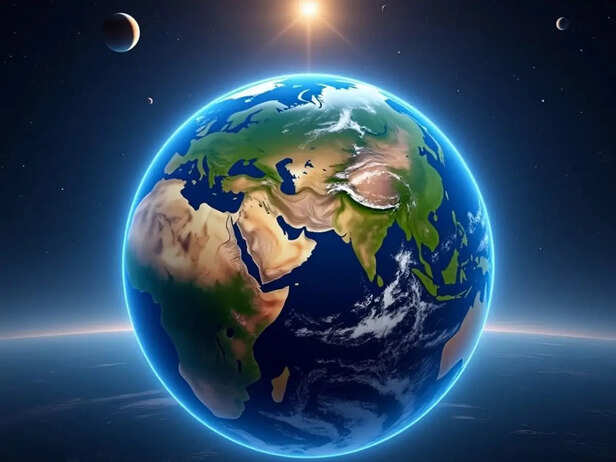
Image credit : AI generated | The idea of Earth suddenly stopping its rotation may sound like science fiction, but it raises important scientific questions
Combined with the earlier destruction caused by inertia and atmospheric movement, these changes would further reduce the planet’s ability to support life as it does today.
Why earth is unlikely to stop spinning
Rotation is a natural outcome of how planets and stars form. The same physical processes that created Earth also gave it its spin. Since there is no known external force acting to bring the planet’s rotation to a sudden halt, scientists do not expect such an event to occur.
The continued rotation of Earth remains a fundamental part of how the planet functions. It influences weather systems, ocean currents, the cycle of day and night and many other processes that make life possible.
While imagining a motionless Earth offers an interesting scientific exercise, the evidence suggests that the planet will continue spinning just as it has since its formation, maintaining the conditions that support life today.

The Science behind a 24-hour fast
By Nancy Jaiswal

He can’t accept her past; Reddit fires back
By Nancy Jaiswal

India's Got Latent 2 isn't winning everyone over; here's what fans are complaining about
By Sneha Kumari

What makes love worth the risk?
By Nancy Jaiswal

Who is Avinash Agarwal? Fans call him the saving grace of India's Got Latent 2
By Sneha Kumari

Could AI develop feelings? Scientists aren't sure
By Nancy Jaiswal

Can stress really change how you look?
By Nancy Jaiswal


